

Convened by
Geographic Scope
Date/time
To:
Location
Affiliations
Language
Please review the details below for registration information if available or contact the Convenor if you would like to attend.
Description
Children’s Understanding of Good Nourishment
Children demonstrated a basic understanding of nutrition, with definitions closely linked to their daily food experiences at home. Their understanding reflects both nutritional knowledge and cultural food practices.
Children described good nourishment as:
- Eating well-cooked food
- Eating food that contains vegetables, cereals, fruits, and animal protein
- Eating food that is hot and prepared at the right temperature
- Eating tasty and sweet food
- Eating foods like eggs, meat, fish, and fruits that help them “get enough blood” and energy
- Eating a balanced diet helps children grow well and stay strong
- Eating food on time (breakfast, lunch, supper, and sometimes snacks)
Some children associate good nourishment with foreign or special foods, showing a perception that nutritious food is not always what they commonly eat at home.
“Good nourishment means eating food that is well-cooked and gives us energy to play and learn.”
— Samuel
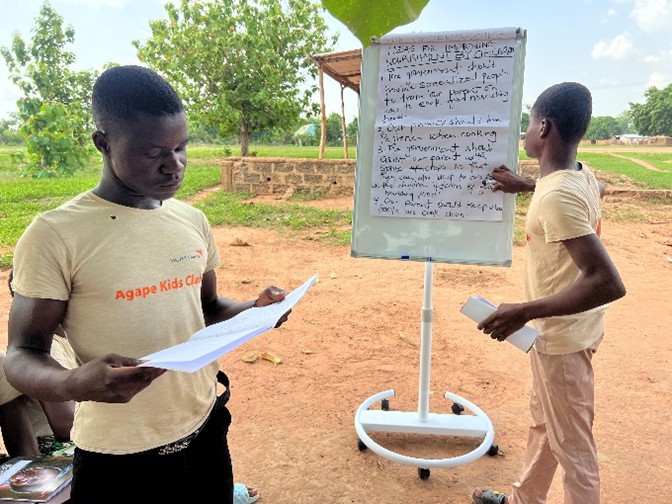
Children’s Experiences and Observations
Children related nourishment strongly to how food is prepared and how often they are fed. Many emphasized that food quality depends on parents’ cooking practices, hygiene, and patience during food preparation.
Key observations included:
- Some meals are repetitive, leading to us feeling bored eating them
- Our mothers sometimes cooked without proper hygiene
- Some children are denied food as punishment
- Our households do not always plan meals to ensure balance
- There is usually wastage because our parents don’t plan
Children’s Recommendations for Improving Nourishment
Children offered practical, realistic solutions, showing strong awareness of household and government roles in improving nutrition.
Recommendations for Parents and Caregivers
Children suggested that parents should:
- Cook food with patience and care
- Maintain good hygiene during cooking (washing hands, keeping food clean)
- Use the right proportion of ingredients
- Prepare food that contains a variety of nutrients
- Serve food hot and well prepared
- Avoid denying food as punishment
- Allow children to make some choices in the foods they eat
- Feed children at least four times daily (breakfast, snack, lunch, supper)
- Plan weekly menus with children involved to ensure a balanced diet
- Manage and reduce food wastage
“Our Parents should be patient and keep food clean when cooking so we don’t fall sick.”
— Esther, 13 years.
Recommendations for Government and Community Support
Children also identified the need for external support, especially for parents:
- Government and partners should provide training for parents on how to cook nutritious food
- Parents should receive support with crops to grow vegetables such as cabbage and carrots
- Families should be encouraged to cultivate crops with different nutrients
- Children should be supported to rear small livestock (poultry, goats, sheep) to improve access to protein foods
- Children’s Role in Improving Nutrition
Children recognized their own responsibilities in improving nourishment, including:
- Eating the food provided at home
- Avoiding food wastage
- Learning about good food choices
- Helping parents with household food activities when appropriate
Acknowledgements
Please login or register for the Portal to contact this Convenor