
Convoqué par
Portée géographique
Date/heure
À :
Lieu
Affiliations
Curateur
Langue
Registration Status
Date limite d'inscription :
Veuillez consulter les détails ci-dessous pour obtenir des informations sur l'inscription si elles sont disponibles ou contacter le Coordinateur si vous souhaitez participer
Description
A child does not need an expensive meal to eat well. What matters is making the most of the foods available at home, combining different food groups, preparing them safely and giving the child the right amount at the right time.
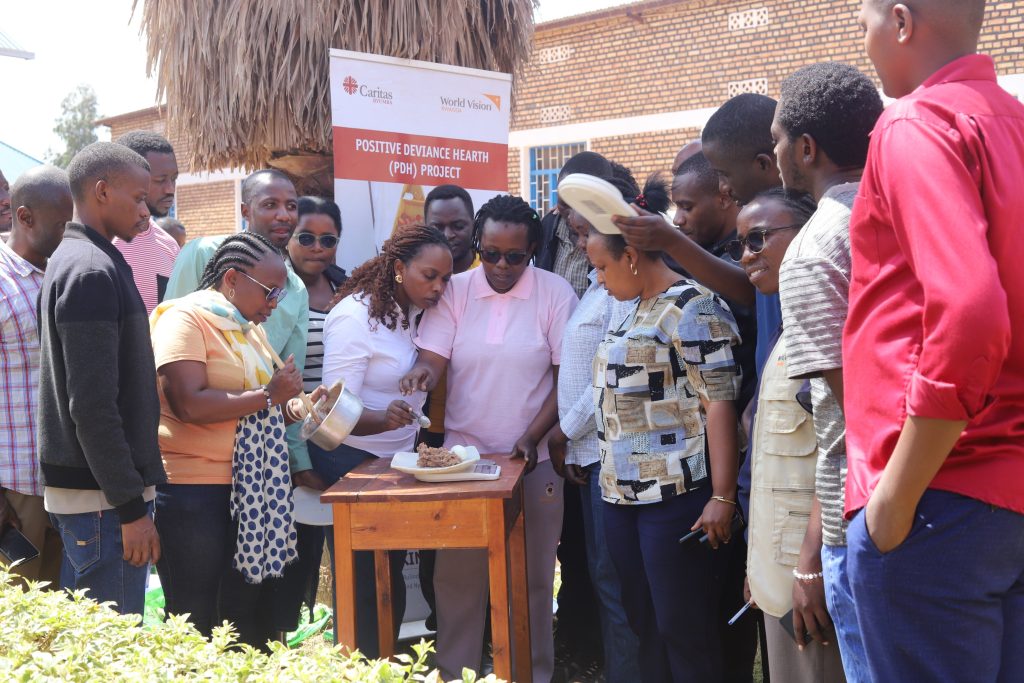
This was one of the practical messages reinforced during the Positive Deviance Hearth (PDH) training conducted in Gicumbi District through the collaboration of World Vision Rwanda, the Diocese of Byumba/Caritas Byumba and Gicumbi District and then after it was practiced in the whole district via training of community health workers and National Women Council at all levels.
A BALANCED MEAL STARTS WITH DIVERSITY
For a young child, a balanced diet should provide different nutrients needed for growth, protection against illness and normal body functions. WHO recommends that children aged 6–23 months receive a diverse diet, including animal-source foods, fruits and vegetables, as well as pulses, nuts and seeds.
A simple way for families to think about a child’s plate is to include three important categories:
Foods that build the body – These provide protein needed for growth and development. Examples include eggs, milk, yoghurt, fish, meat, beans, peas and other legumes.
Foods that provide energy: These help children get the energy they need to play, learn, grow and carry out daily activities. Examples include sweet potatoes, Irish potatoes, cassava, maize, rice, bananas and other staple foods.
Foods that protect the body: These provide vitamins and minerals that support health and help the body function properly. Examples include carrots, pumpkin, leafy green vegetables, tomatoes, mangoes, papaya, avocado and other fruits and vegetables.
The important point is not to rely on only one category. Combining different foods in the same meal gives the child a wider range of nutrients.
For example, instead of serving a child plain porridge, a caregiver can enrich the meal with locally available nutritious ingredients. A meal of thick porridge, beans or another legume, vegetables and fruit, or sweet potatoes with an egg and vegetables, can provide greater dietary variety than a meal based on only one food.
WHO also recommends that children aged 6–23 months consume animal-source foods such as meat, fish or eggs daily, alongside fruits and vegetables.
SAFE FOOD IS PART OF GOOD NUTRITION
A nutritious meal can only benefit a child when it is prepared and served safely.
Caregivers should wash their hands at critical times, use safe water, keep cooking utensils clean, protect food from contamination and maintain clean food preparation areas. WHO identifies good hygiene and safe food handling as essential elements of appropriate complementary feeding.
This is particularly important for young children because illness can interfere with their ability to eat and maintain good nutritional status.
THE RIGHT AMOUNT ALSO MATTERS
Good nutrition is not only about what a child eats. It is also about how much, how often and how the food is given.
For healthy children aged 6–23 months, WHO recommends gradually increasing food amounts as the child grows. At 6–8 months, complementary foods can start with small amounts and increase gradually; by 9–11 months, a child may receive about half of a 250 ml cup or bowl per meal, and from 12–23 months, about three-quarters to a full 250 ml cup or bowl, depending on the child’s needs and appetite.
Meal frequency should also increase with age: generally 2–3 meals per day for children 6–8 months and 3–4 meals per day for children 9–23 months, with nutritious snacks where appropriate.
WHEN A CHILD IS ALREADY MALNOURISHED
When a child is identified with malnutrition, simply giving more food without guidance is not enough.
The child needs to be assessed, monitored and followed up by trained health or nutrition professionals. The appropriate amount and type of food or therapeutic/supplementary product depend on the child’s condition, age, weight and treatment plan.
For children with moderate acute malnutrition, WHO emphasizes nutrient-dense foods and appropriate nutritional counselling, together with follow-up to assess the child’s response.
This is why caregivers should follow the quantities and feeding instructions provided by health workers rather than using one fixed number of grams for every malnourished child.
FROM KNOWLEDGE TO PRACTICES
The PDH approach creates space for families and communities to identify positive practices that are already working and learn from one another. In Gicumbi, the message is clear: preventing malnutrition requires more than knowing which foods are nutritious. Families need to know how to combine them, how to prepare them hygienically, how to feed children according to their needs and when to seek professional support.
A balanced meal does not always require expensive ingredients. Beans, vegetables, fruits, sweet potatoes, eggs, milk and other locally available foods can become powerful tools when they are properly combined and prepared.
Through the continued collaboration between World Vision Rwanda, Caritas Byumba and Gicumbi District, practical nutrition knowledge can move from training sessions into kitchens, dining spaces and households where everyday decisions can make a difference in a child’s growth and well being.
Remerciements
Veuillez vous connecter ou vous inscrire sur le Portail pour contacter ce Coordinateur