
Convoqué par
Portée géographique
Date/heure
À :
Lieu
Affiliations
Curateur
Langue
Registration Status
Date limite d'inscription :
Veuillez consulter les détails ci-dessous pour obtenir des informations sur l'inscription si elles sont disponibles ou contacter le Coordinateur si vous souhaitez participer
Description
A nutritious meal can help a child grow, but what happens when that meal is prepared with unsafe water, served with unwashed hands, or eaten in an environment contaminated by germs?
For families in Gicumbi District, the fight against child malnutrition is not only about what children eat. It is also about keeping their homes, food, water and surroundings clean.
Hygiene is one of the foundations of good nutrition. When children are frequently exposed to dirt and disease-causing germs, they can suffer from illnesses such as diarrhoea and other infections. These illnesses can affect a child’s ability to eat, absorb and make good use of nutrients, increasing the risk of poor growth and malnutrition.
This is why hygiene and sanitation are important parts of community action to prevent child malnutrition.
As part of the Positive Deviance Hearth (PDH) approach promoted by World Vision Rwanda in partnership with the Diocese of Byumba/Caritas Byumba and Gicumbi District, communities are encouraged to look at practical behaviours that can protect young children from malnutrition. Alongside nutritious feeding, families need to maintain good hygiene practices that help keep children healthy.
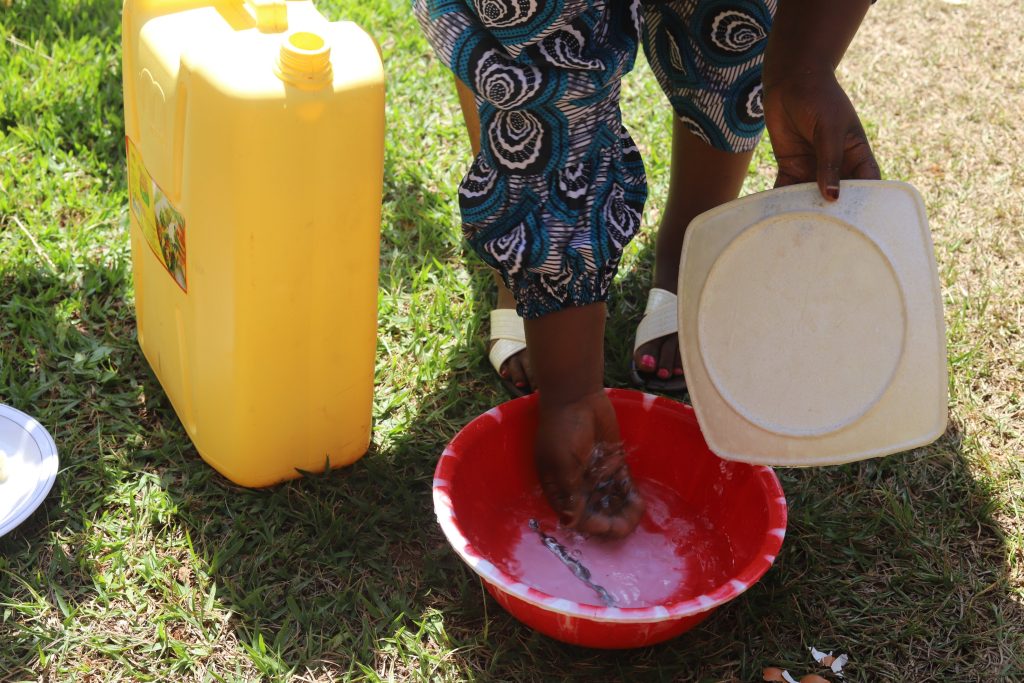
Simple actions can make a difference: washing hands with soap at critical times, using safe water, keeping food preparation areas clean, properly storing food, maintaining clean household surroundings, and ensuring that children live in a hygienic environment.
These practices are especially important for young children, whose health can quickly be affected by infections.
For caregivers, this means that preventing malnutrition starts even before food reaches the child’s plate. A nutritious meal prepared and served in a clean environment gives the child a better chance to benefit from the food.
The message is also one of shared responsibility. Mothers, fathers, caregivers and other family members all have a role in maintaining household hygiene and protecting children from preventable infections. Community members can also encourage one another to adopt and maintain healthy practices.
Through the PDH approach, the focus is not simply on introducing new ideas, but on identifying positive practices that already exist within communities and encouraging families to learn from one another. This creates an opportunity for practical solutions that can be maintained using resources available within households and communities.
The collaboration between World Vision Rwanda, Caritas Byumba and Gicumbi District therefore brings together nutrition, community participation and practical household action. As Gicumbi strengthens its efforts to prevent child malnutrition, hygiene remains an essential part of the solution.
Remerciements
Veuillez vous connecter ou vous inscrire sur le Portail pour contacter ce Coordinateur