

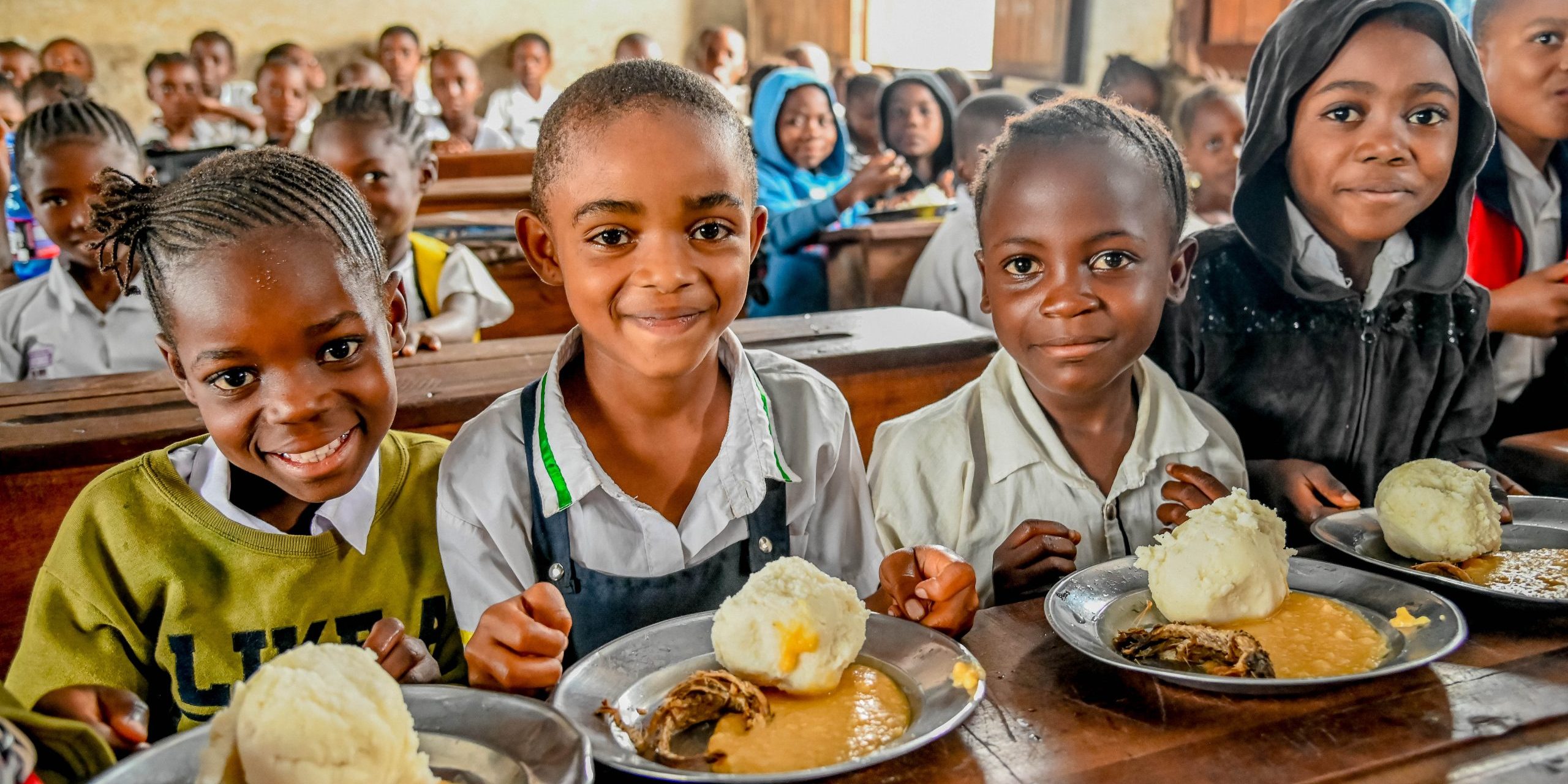
Serge Lungele reflects on how children’s leadership is reshaping school feeding policy and redefining what accountable education systems should look like in the Democratic Republic of the Congo.
Too often, school meals are treated as a welfare intervention sitting at the margins of education policy. In the Democratic Republic of the Congo (DRC), children are challenging that assumption directly. They are reminding policymakers, donors and humanitarian actors that nutrition is not separate from learning. It is one of its conditions.
That shift matters now. Across the DRC, families continue to navigate overlapping pressures linked to hunger, displacement, poverty and disrupted access to education. Over 28 million people in the country faced acute food insecurity in 2025. Nearly one out of every two children under five suffers from chronic malnutrition or stunted growth, which affects their brain development, reduces their IQ, and weakens their immune system.
Against this backdrop, school meals are increasingly being recognised not simply as a safety net, but as public infrastructure for learning, retention and dignity.
What is changing in the DRC is not only the policy conversation
Since the launch of the ENOUGH campaign, I have had the privilege of accompanying children as they engage decision-makers and demand accountability in the fight against child hunger and malnutrition. What struck me most was not only their confidence, but the precision of their understanding. They know exactly what hunger does inside a classroom. They know what it means to try to concentrate while distracted by emptiness, or to miss school entirely because there is no meal waiting there.
And they are no longer willing to be absent from decisions that affect them.
Beyond consultation
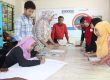
Across humanitarian and development contexts, 74 Nutrition Dialogues were conducted nationwide, engaging nearly 1,902 participants, including children and community stakeholders. A further 29 Nutrition Dialogues brought together 917 faith leaders from different denominations. These were not symbolic consultations. They became spaces where children translated lived experience into concrete recommendations that informed the DRC’s National School Feeding Strategy.
That distinction matters. Development systems often speak about child participation while continuing to design policy around children, rather than with them. The result is predictable: programmes that may reach schools but fail to fully understand children’s realities within them.
In the DRC, children helped shift the centre of gravity
The validation and operational launch of the National School Feeding Strategy by Prime Minister Judith Suminwa Tuluka in Tanganyika Province marked more than a policy milestone. It demonstrated what becomes possible when national leadership treats children’s perspectives as a form of evidence rather than an emotional addition to technical discussions.
Importantly, the launch took place at a school supported through a World Vision-implemented school feeding project funded by the World Food Programme. That connection between community experience, national policy and international partnership is precisely what sustainable progress requires.
School meals are not a secondary issue
Globally, momentum around school feeding is growing. The African Union’s focus on home-grown school feeding and increasing investment discussions among multilateral institutions reflect a broader recognition that school meals strengthen education systems, local economies and public health simultaneously. Yet financing remains fragile.
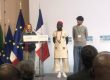
During School Feeding Awareness Week in March 2026, children in the DRC intensified their advocacy through public Calls to Action directed at national leaders. One was presented to the President of the National Assembly, urging the formal budgeting of the School Feeding Programme within the national finance law. Faith leaders also signed a separate Call to Action, recognising their responsibility given that most schools in the country are managed by religious institutions.
Children understood something that development actors sometimes overlook: strategies without domestic financing remain vulnerable to political cycles and external funding shifts. As Miradie, a 14-year-old Vice President of the Child Parliament in Kongo Central Province, stated:
Let children’s voices be heard in all decisions that affect us. We want to be involved, make suggestions, and contribute to this programme. School meals have a direct impact on us. We are the primary beneficiaries, and we also want to be the primary advocates.
Her words carry an important challenge for all of us.
If children can recognise the link between nutrition, dignity and learning, then institutions should stop treating these sectors as separate silos competing for limited resources. School feeding is education policy. It is health policy. It is social protection policy. And increasingly, it is a test of whether governments and partners are willing to build systems that respond to lived realities rather than institutional boundaries.
As WHO Director-General Tedros Adhanom Ghebreyesus observed:
The food children eat at school, and the environments that shape what they eat, can have a profound impact on their learning, and lifelong consequences for their health and well-being.
The next step is clear. Governments must move school feeding from short-term programme logic into long-term national financing frameworks. Donors and multilaterals should prioritise locally owned systems that strengthen accountability and child participation. Humanitarian and development actors must stop seeing children only as recipients of policy and begin recognising them as contributors to it.
Because in the DRC, children have already shown us what more responsive policymaking can look like. The question now is whether institutions are prepared to listen.
Serge Lungele is Advocacy & External Engagement Manager at World Vision Democratic Republic of Congo, with expertise in peacebuilding and conflict resolution in the African Great Lakes Region. He has supported peace restoration through programmes focused on disarmament, voluntary repatriation of armed groups, and refugee return. He has also coordinated the Mennonite Central Committee SEED programme, engaging youth from diverse backgrounds to strengthen social cohesion and community‑led peacebuilding.
As posted on the World Vision website: https://www.wvi.org/opinion/view/why-school-meals-must-be-treated-education-policy-drc